Saturday, August 30, 2014

Mustang


The car that led to the birth of the "pony car" classification with its iconic logo celebrated its 50ᵗʰ birthday this year.

The first generation of Ford Mustang was clearly influential to both the auto industry and drivers, but by the time I was interested in cars the brand had degenerated to the execrable third generation Mustang.

The Mustang has been reproduced in 1/72 scale by a few different companies, but classic first generation models are still relatively scarce for such an iconic car.

The most commonly found first generation model is the '64½ Mustang manufactured by KiNSMART. These are toy cars with a pull-back motor, and do not seem to be well thought of in the diecast car collecting community. Most of the ones that are available now are sold as keychains.


The keychain versions still retain the pull-back motor, so I guess you might be able to send your keys to someone nearby in a pinch.


More elusive models belong to the Kyosho MiniCar Collection, and were released as part of their Ford 100ᵗʰ Anniversary Collection. These models were given away as prizes for buying two cans of coffee at Lawson in October of 2007.


The models are a 1967 Ford Mustang GT-390 (green), and a 1969 Ford Mustang Boss 302 (blue).


The most easily available model is probably the Yat Ming Mustang GT, which represents a fifth generation vehicle. I believe that the model is the same as the one from the Schuco Jr. line.


I only checked the dimensions for the wheelbase, and going by that, I'd say the models are definitely accurate for 1/72 scale.


Classic 1967 Mustang


Monday, August 4, 2014

200,000 Hits


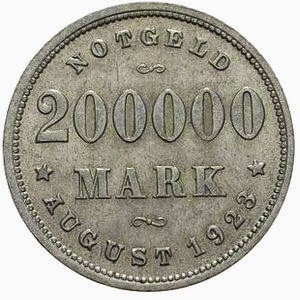
In August 2012, 1/72 Multiverse reached 100,000 hits. Now, almost exactly two years later, it has reached the 200,000 mark.

I've been in organization/cataloging mode, so have not done much in the way of blogging, building, or painting. Looking at all my unbuilt kits, I realize I could probably open a small store... I also seem to have accumulated a lot of excess metal miniatures (i.e., not suitable for 1/72 scale) that I should sell off. I have mentioned the idea to friends who are also collectors, but the response has overwhelmingly been the same:


Anyway, just posting to commemorate this milestone, and to thank all the readers of 1/72 Multiverse for their continued support.

I'll try to add at least a couple of real entries later this month.


Monday, June 23, 2014

Vehicle Industrial Government


The VIG1 was a tractor manufactured by David Brown Engineering Limited for use by the RAF as an aircraft/supply tug during WWII and well into the 50's.

1/72 versions of the tractor can be found in the Airfix Short Stirling kit from 1966, and the WWII RAF Bomber Re-Supply Set (A05330) from last year. A 1/76 diecast version is also produced by Oxford.

I am currently assembling both old and new Airfix tugs, having picked up an old Craft Master (MPC) Short Stirling at a good price.

The instructions from the old Airfix kit are rather interesting, with detailed assembly instructions written out.


Curiously enough, even though the parts are numbered in the assembly diagram, the sprues do not have any corresponding numbers on them. I'm not sure if the currently produced Airfix Stirling still lacks numbers, but there was one part (223) I had a real difficult time finding.

A comparison of some of the parts are shown below. The tug from the Stirling kit is in white plastic, while the one from the Bomber Re-Supply kit is in gray.


Overall, the two kits are almost identical in size.  Dimensionally, the two major differences are the fenders and the front wheels. The fenders on the old Airfix kit are almost 1mm wider than the fenders on the new kit (making the tug appear almost 2mm wider). The front wheels on the old kit are also almost 1mm larger in diameter.

Finally, a comparison with the Oxford diecast model of a tug in RN Fleet Air Arm colors.


The Oxford model is almost identical in size with the new Airfix model. It might even be a hair longer. Obviously there is something off with either the Airfix models, or the Oxford model. The tugs are about the size of a jeep, and I can tell the difference between a 1/76 and 1/72 scale jeep very readily. Not so with these models. They are either all 1/76, or all 1/72, but since they are consistent in size I wont complain too much.

In my opinion, the new Airfix kit is the most accurate looking, with superior detail. The old Airfix kit is the most simplified, with some oddities, like a mesh front grille. The Oxford model falls somewhere in between.